Video componentsMove the camera
Parallax dive

When to use
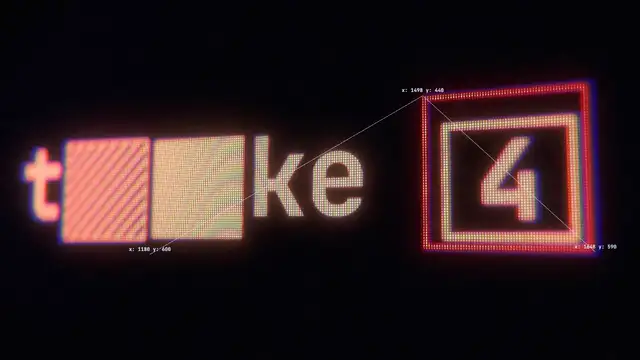
Use when a title should arrive by flying into a scene, not by appearing in it. Layers sit at real depths in CSS 3D; the camera moves forward through them, so near layers rush past the frame edge, mid cards drift outward and the far dots barely move. The title starts small and deep and ends at scale 1. The speed differences are the depth; nothing is faked with per-layer offsets.
The code
.stage { position: absolute; inset: 0; perspective: 80vh; perspective-origin: 50% 50%; }
.rig   { position: absolute; inset: 0; transform-style: preserve-3d; }
.layer { position: absolute; left: 50%; top: 50%;
         translate: calc(var(--x) * 1vw - 50%) calc(var(--y) * 1vh - 50%);
         transform: translateZ(calc(var(--z) * 1vh)); }   /* depth in vh: --z -240 far, -120 title, +30 near */
Easing
Each ease is a pair of After Effects handles from core/motion/presets.js. Every curve as CSS.
| Ease | Leaving a key | Arriving at a key |
|---|---|---|
land | 12% influence, speed 4.8 | 75% influence, speed 0 |
Notes
import '../../core/engine/page-api.js';
import { easeFn } from '../../core/motion/presets.js';
const t0 = 0.1, dur = 1.8, dive = 120;                     // dive: camera travel in vh, so the title (z -120) ends at z 0
const ease = easeFn('land');
vawe.onFrame((t) => {
  const p = ease(Math.min(1, Math.max(0, (t - t0) / dur))), vh = innerHeight / 100;
  rig.style.transform = `translate3d(${-3 * p * vh * 0.5625}px, 0, ${dive * p * vh}px)`;   // a small sideways drift adds parallax
  near.forEach((n) => { n.style.opacity = Math.min(1, Math.max(0, (52 - dive * p) / 22)); });
});
A layer at depth z is drawn at P / (P - z - travel) of its size, P being the perspective (80 vh), so a layer with z + travel near 80 vh fills the frame: fade the near layers out before that, as the last line does. Put every depth in vh, not px, or the scene changes with the aspect. Give the camera a sideways drift of a few vw so the parallax shows in two axes. Keep the title the only large bright thing; the cards are context and stay dim. No blur is needed, the speed differences carry the depth.
Layered depth on a 2D camera move. When the move is a push, pull or whip on a flat world (see camera-moves) and it should read as a space, split the world into full-frame position: absolute; inset: 0 layers by depth and let the parallax helper scale each by its depth d (a push to 1.12 becomes 1.036 for the ground and 1.216 for the front):
import { parallax } from '../../core/motion/presets.js';
parallax([[ground, 0.3], [mid, 1], [front, 1.8]], { kind: 'push', at: 0, duration: 2.4 });
parallax([[ground, 0.4], [far, 0.7], [mid, 1]], { kind: 'pull', at: 2.9, duration: 1.4, from: 1.15 });
The ground moves least, the type moves as the camera, a card or chip in front moves most. Keep the front layer’s things inside the frame at the end of the move: at 1.8 a chip near the right edge leaves it. If the whole world also flies (scale-through), put the layers under one wrapper and fly the wrapper, because transforms on different elements compose.
Looks (ground, type, radius, accent) live in demo/demo.css; this snippet keeps neutral tokens.
Sound
Sound: none; the dive is space, and a whoosh on it reads as a cheap trailer.