How to seek CSS animation, forward and backward
Seeking an animation forward is easy. Seeking it backward is the part of Web Animations that nobody tests. We render video by setting currentTime on every animation on a page, then taking a screenshot. That works on the first pass. It breaks when a render revisits an earlier time, when a page cancels an animation, when a font arrives late, or when the browser keeps its own clock running. This post is a short field guide to how to seek CSS animation reliably, from four bugs we hit and fixed.
The problem: agents write CSS keyframes and element.animate
Our agents write films as plain web pages (HTML to video beat our own JSON scene format). They use CSS @keyframes, CSS transitions, element.animate() and SVG. We want the renderer to accept all of it. The renderer has to put every animation at time t, in any order, and screenshot the result. That means forward seeks, backward seeks and repeated seeks to the same t, all giving the same pixels.
A page can also create and cancel animations whenever it likes. The renderer cannot assume the list of animations is stable.
What we tried, and what broke
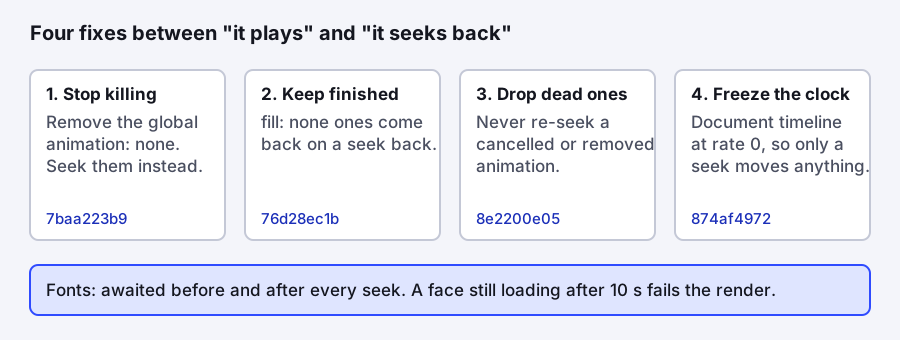
1. We were killing animations
Our early tokens file had a global * { animation: none; transition: none }. It stopped CSS animations before they existed, so there was nothing to seek. Commit d6b380d7c (2026-09-27) removed it. After that, a CSS keyframe loop or transition on a page is seeked like any other animation. The same commit made the seek drive SVG SMIL (<animate>) on its own separate timeline.
2. Finished animations disappeared
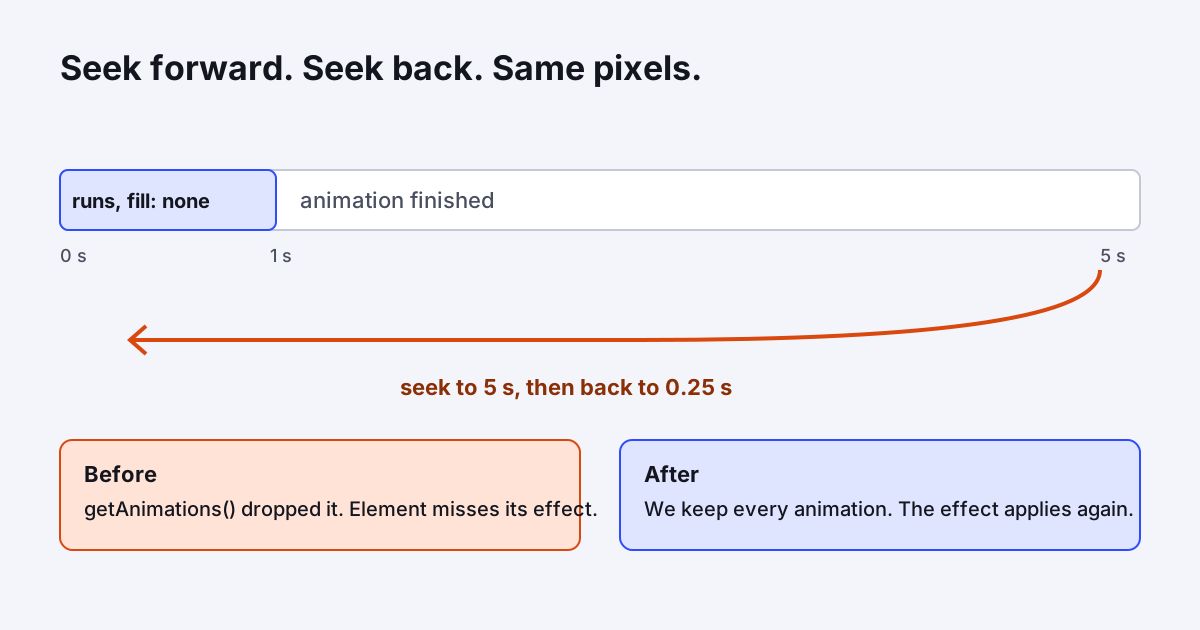
document.getAnimations() drops a finished animation with fill: none. If a render seeks to 5 s and then back to 0.25 s, the list no longer contains that animation, so the element misses its effect. Commit e06191445 (2026-10-07) keeps every animation the page made in a set, and seeks all of them each time. The regression test tests/media/seek-fill-none.test.mjs uses a CSS animation and a waapi one, both with fill: none. It seeks to 0.25 s on a fresh page and expects opacities of 0.2 and 0.3. It then seeks to 5 s on a second page, back to 0.25 s, and expects the same two values.
3. Dead animations stayed in the set
Once we kept everything, we had to forget the right things. Commit d30e402e1 drops an animation from the set if it is idle or its target is no longer in the document. A cancelled animation then stays cancelled on later seeks, and a removed element stops being touched.
4. The browser's own clock kept running
The document timeline runs in real time from page load. Before our first seek paused anything, the compositor rasterized animated layers against that real time. A first seek at 1.5 s after load painted other edge pixels than a first seek at 0.05 s. We set the animation playback rate to 0 through the DevTools protocol (1454df446, 2026-10-08), so only a seek moves an animation. The same pass is described from the clock side in Time is the seek, never the clock.
What we built: one seek function
The seek is a single function, seekTo(t) in core/engine/page-seek.js. The renderer and the studio both use it, so a scrub in the studio and a frame in the render cannot disagree about what time t means. In order, it:
- waits for fonts,
- sets the virtual clock,
- calls
window.seek(t)if the page defines it, - waits for fonts again,
- pauses every remembered animation and sets
currentTimetot * 1000, - pauses SVG animations and sets their time,
- awaits every
vawe.onFramehook.
Fonts get their own rule. awaitFonts waits until every face in document.fonts has finished loading, including faces whose load starts while we wait. If a face is still loading after 10 seconds, the render fails and names the family. A screenshot with a fallback font is a silent wrong answer, so we make it a loud error (commit c9dec4c55). It uses the real timer on purpose, because the virtual clock owns setTimeout.
The measured result
There is no aggregate number for this work, and we do not want to invent one. The concrete figures are two: a 10-second font deadline, and a 1.5 px frame-to-frame flip.
The 1.5 px case came from the gooey filter, one of our motion moves. On a still shape the outline flipped by 1.5 px between frames. The fix (7c1c59562, 2026-10-09) gave the SVG filter a wide region (x="-30%" y="-30%" width="160%" height="160%") and put will-change: transform on its wrapper. The default filter region is 10 percent of the box and cuts the blur. Here is the move after the fix:
What we would tell you if you build a seekable renderer
- Test the way back. Seek to the end, then to the middle, and compare with a fresh page seeked once to the middle. This one test found our
fill: nonebug. - Do not trust
getAnimations()as a long-term list. It reports what is live now, not everything the page made. - Pause the browser's timeline. If a second clock runs, you have a second source of nondeterminism.
- Fail loudly on fonts. A 10-second wait with a named family is easier to debug than a quietly wrong frame.
- Seek, do not kill. Banning an API removes an authoring path. Seeking it keeps the page natural to write.
For the rest of the picture, see the easing pages for curves you can use in these animations, the docs on motion, and the source at github.com/Vandit1604/vawe. We compare this approach to other tools on /hyperframes-alternatives.
In the code
core/engine/page-seek.js:seekToandawaitFonts.tests/media/seek-fill-none.test.mjs: seek past the end and back.d6b380d7c(2026-09-27): CSS animation, transition and Web Animations are seeked, not killed.e06191445(2026-10-07): keep every animation so a finishedfill: noneone applies again.1454df446(2026-10-08): freeze the document timeline.7c1c59562(2026-10-09): the gooey filter region and wrapper.