Motion pass
Read every cut of the draft at full size, fix what reads flat, and write one row for each cut in the brief.
At the end of this page the draft has no flat cut, and the three motion checks are clean or waived with a reason. The brief has a filled “Motion pass”. This is stage 7 of the loopThe loop is the ten stages that make a film: brief, references, design kit, states, board, draft, motion pass, critique, fix and final..
You need a full draft from Draft. The strip verbs read the last full draft, so a range draft does not count.
Steps
Read the motion checks
The draft prints these. Each one is clean, or the page declares a waiverA waiver is a declared break of a check rule, with a measured reason, in the page's <script id="authoring"> block. with a reason that names a world or a second and a measured number.
| Check | The rule |
|---|---|
overshoot-share | 21 to 61 percent of the arrivals that move overshoot. About 1 in 3 lands with a spring (EASE.pop). Type, UI and counts do not overshoot by default. |
live-hold | No span over 0.5 s outside a declared hold where no part of the frame moves by itself. A camera drift does not count. |
constant-camera | The camera moves for 60 percent of the film or less. It holds still by default. |
seam-variety | Each moving seam changes axis or direction from the one before. A hard cut is exempt. |
Strip every cut
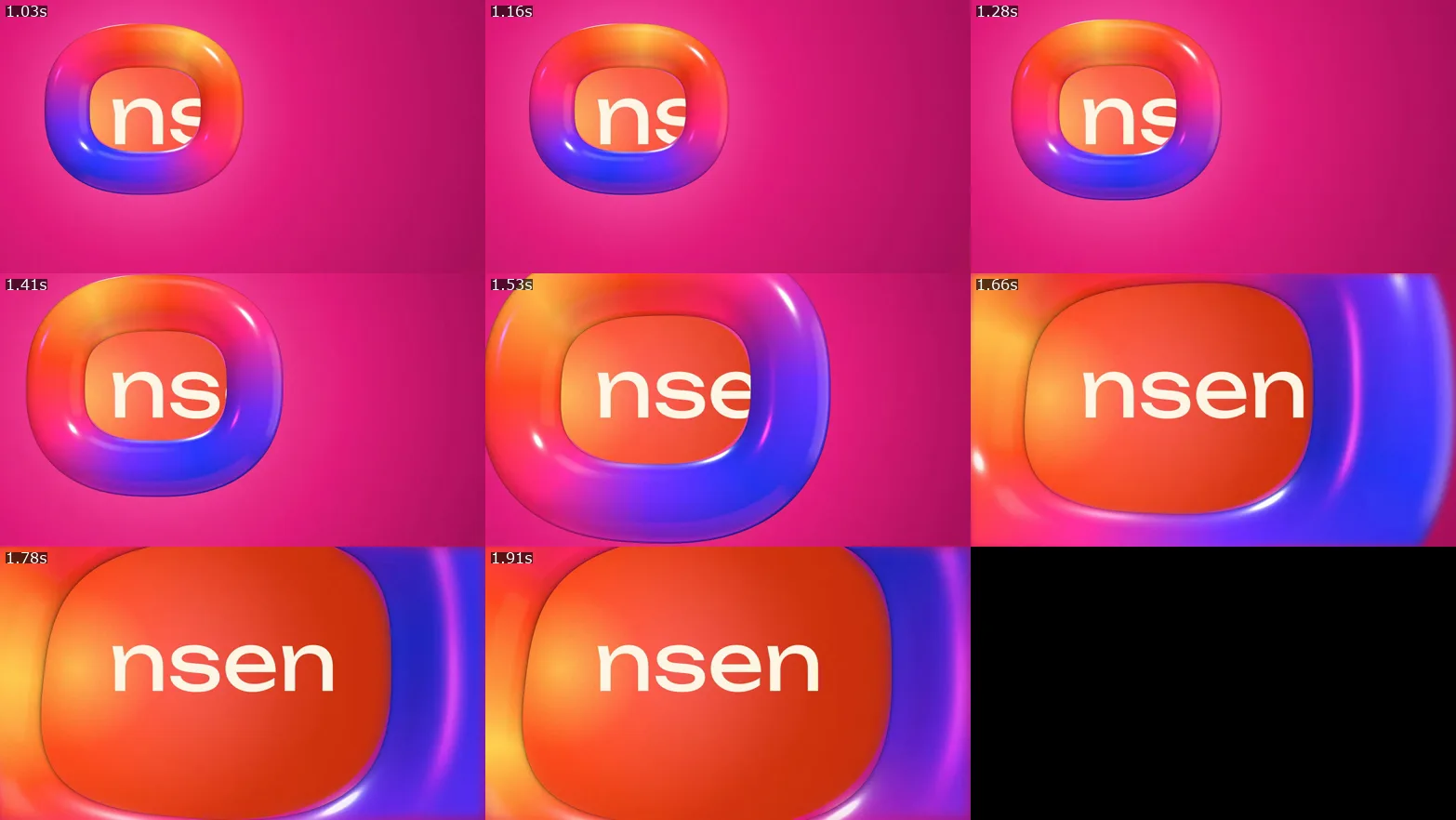
bin/vawe strip films/hello/page.html --cutsThis writes one strip for each worldA world is the one element that holds one beat of the film, marked with data-world="<id>". change, centred on the cutA cut is the change from one world to the next.. Read each grid at full size. Look at how the outgoing part and the incoming part overlap.
Look closer at the spectacle second
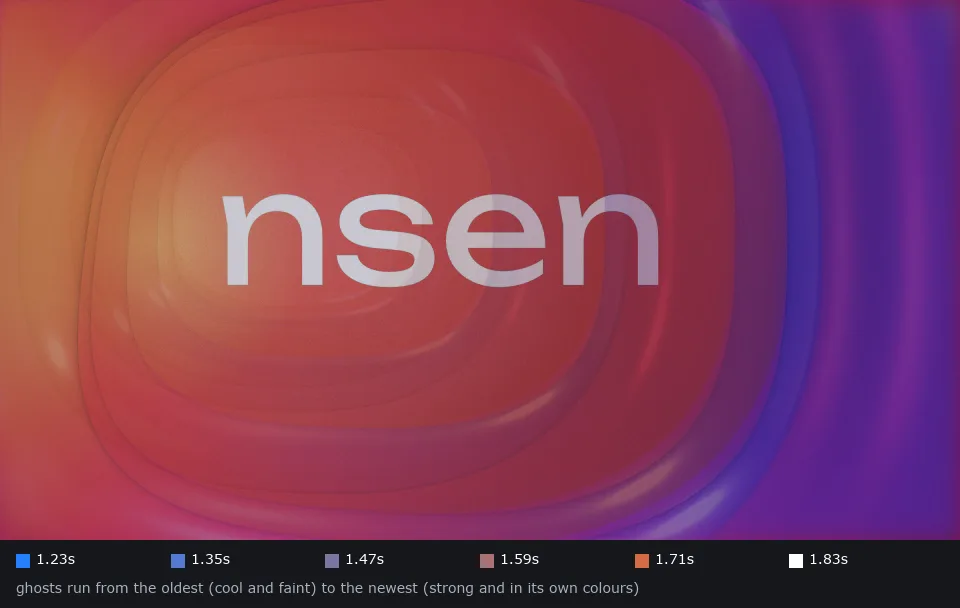
bin/vawe strip films/hello/page.html --at 2.75 --onion
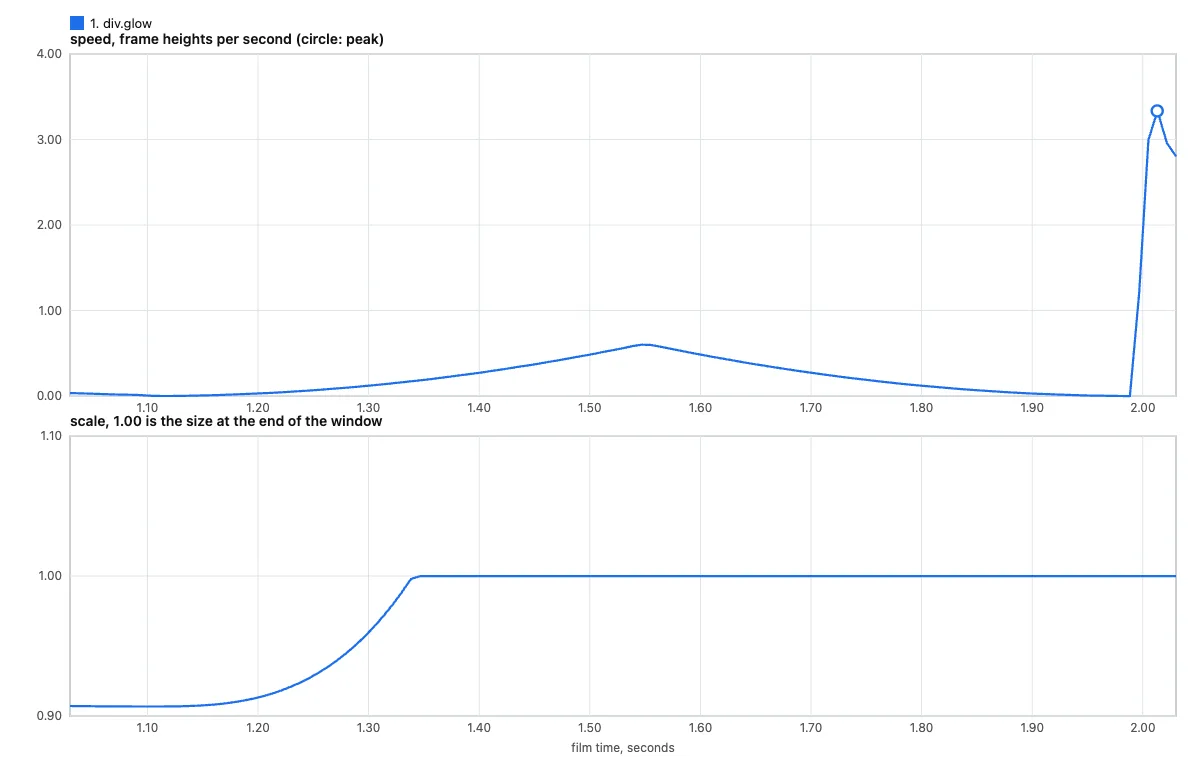
bin/vawe strip films/hello/page.html --at 2.75 --velocity
--onion blends several frames of one move into one image: the newest is the strongest, and older frames are fainter. It shows the spacing, the path and the overshoot. --velocity graphs the speed and scale of the elements that move most, with the start, peak, settle and overshoot of each. --sel picks elements by a CSS selector. --velocity reads a page only.
Check each cut against the principles
For each cut, check these points: anticipation on the hero, follow-through and overlap, eased spacing, and arcs on travelling elements. Also check secondary action, exits faster than entrances, and holds alive through element motion. The camera stays still unless it is the spectacle. The sources are taste/craft/motion-craft.md and core/motion/README.md.
Fix what reads flat
Edit the page. Render only the seconds you changed.
bin/vawe dev films/hello/page.html --from 2 --to 4
bin/vawe strip films/hello/page.html --at 2.75
Write one row for each cut
In brief.md, fill the “Motion pass” section with one row for each cut: each principle you checked, what read flat and what you fixed. The next: line asks for this while the section is empty.
What you see
Each strip run prints the path of an image. A grid also gives the seconds when the move starts, peaks and settles. --onion writes to out/onion/<film> and --velocity writes a PNG to out/velocity.
What good looks like
- The hold is not frozen. One part moves in every hold (a line typing, a counter, a glint), not the camera.
- A hero arrival overshoots. Most others land on a soft stop.
- Two moving seams in a row do not go the same way.
- Every row of “Motion pass” names a cut and a fix. The example is the last section of
films/examples/colour-sting/brief.md.
Common mistakes
| What you see | Why | What to do |
|---|---|---|
strip --cuts finds no cuts | The page has no data-world elements, or no full draft exists | Add the elements, then run bin/vawe dev |
| A camera drift in every hold | You tried to fix live-hold with the camera | Give the hold an element motion instead, and keep the camera for the spectacle |
ship warns that the Motion pass is empty | The section still has its placeholder row | Write the rows; the warning is advice and does not stop the render |