Simple marquee

When to use
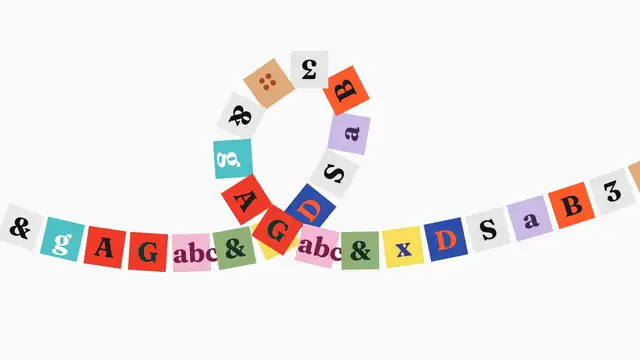
Use when rows of pictures, logos or words must slide for a whole beat, and the rows must run in different directions: a ticker band, a "weekly finds" wall, a trust strip. Each row is one set of items repeated four times that moves one set width and wraps without a seam. Clip: simple-marquee.mp4. Demo: demo/simple-marquee.html.
Credit: port of fancy by Daniel Petho, MIT. Source: simple-marquee (repo). The maths and the demo layout are the original's.
A row is repeat copies of its items side by side, each copy flex-shrink: 0. All copies get the same translateX(x%), where the percent is of one copy's own width. When x wraps from -100 to 0 each copy sits where the one before it was, so the loop is seamless.
The code
const BASE_VELOCITY = 8;     // percent of one copy per second: a 1120 px copy moves 90 px per second
const REPEAT = 4;
const wrap = (v) => ((v % -100) + -100) % -100;           // 0 down to -100, also for positive v
window.seek = (t) => rows.forEach(({ copies, sign }) => {   // sign: left -1, right +1; up and down use translateY
  const x = wrap(sign * BASE_VELOCITY * t);
  copies.forEach((c) => { c.style.transform = `translateX(${easing ? easing(x / -100) * -100 : x}%)`; });
});
Easing and timing
The clip runs 4 s. The look is vawe.
Notes
Layout of the demo (a 532 px tall box, scaled to the frame): three rows of five 192 x 128 tiles, 16 px margin each side (32 px gap), 16 px between rows, the first row 324 px from the top; the title "Weekly Finds" is 60 px, centred, 133 px from the top. Directions: left, right, left.
The numbers that make it look expensive
- 8 percent per second for every row, so a wider set moves faster in pixels but laps in the same 12.5 s.
- Alternate the direction row by row (left, right, left): the eye reads weave, not a belt.
- Four copies cover any frame up to four set widths wide. Fewer copies show a gap on the wide side.
- An
easingfunction is applied to each lap (easing(x / -100)), so a lap can start and stop softly. - The demo reads the scroll, which is at rest, so its speed is exactly 8.00 (measured on the live page). A row with no scroll input moves 8.04: the original maps a constant 1 to a factor of 0.005.
The common mistake
Moving the row with left or a keyframe that jumps back: the copies must wrap by one set width, not by the row width. Also a first set narrower than the frame with repeat 2: the wrap shows a hole.
Not ported: scroll velocity (it speeds the row and flips its direction), drag with decay and the hover slow-down. They are inputs, not motion. Difference from the original: the third row sits below the fold in a 16:9 frame, as it does at scroll 0 in the demo box; the tiles are seeded colour gradients in place of the demo's images.
Sound
Sound: none; or a quiet tape click on each tile.
Related moves


See all 125 moves. Learn how a page becomes a film in the docs, copy chains of moves from the recipes, or read the motion guide.